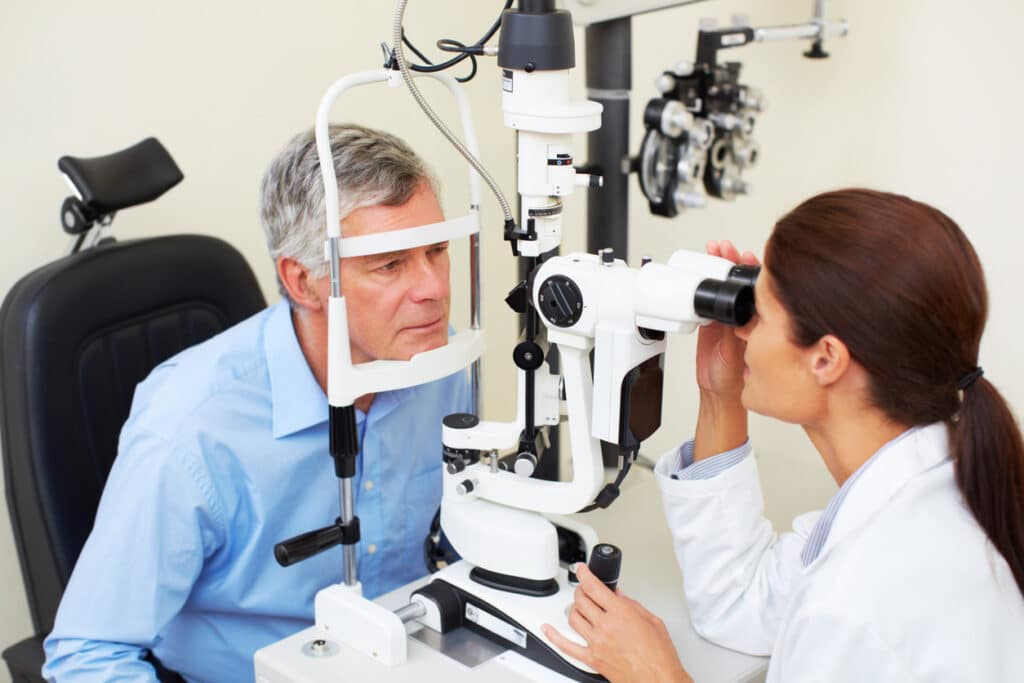
A glasses prescription that seems to keep changing or vision that becomes increasingly blurry or distorted can be a reason to look more closely at the health and shape of your cornea. In Cary, North Carolina, our team at Laser Eye Center of Carolina evaluates corneal conditions and provides corneal collagen cross-linking for keratoconus. Our founder and Medical Director, Dr. Dean Dornic, is a board-certified, fellowship-trained vision correction specialist.
How Keratoconus Changes the Cornea
The cornea is the clear front surface of your eye. Its shape helps direct incoming light so it can focus properly. Our explanation of how the eye works provides a closer look at this process.
With keratoconus, the cornea becomes thinner and begins to bulge outward instead of maintaining its usual rounded shape. As that shape changes, vision can become increasingly distorted and refractive problems such as nearsightedness or astigmatism may worsen.
The condition can progress gradually, which is why the earliest changes may not immediately seem unusual.
Vision Changes That May Deserve a Closer Look
Keratoconus symptoms can overlap with many other vision concerns, so experiencing one of these changes does not mean you have the condition. An eye examination is needed to determine the cause.
Possible signs include:
- Blurred or distorted vision
- Increasing sensitivity to light
- Changes in your eyeglass prescription
- More difficulty seeing clearly at night
- Halos around lights
- Contact lenses that become harder to fit comfortably
Why Progression Matters
Keratoconus is important to identify because the cornea can continue changing over time. As the condition progresses, obtaining clear vision with ordinary glasses or contact lenses may become more difficult.
Evaluation allows us to examine the cornea and determine whether changes are occurring. If keratoconus is progressing, treatment may be considered to strengthen the tissue and limit further structural change.
That is different from simply updating a prescription. Glasses or contacts may improve how clearly you see, but they do not address progression of the corneal condition itself.
Corneal Cross-Linking Is Designed to Strengthen the Cornea
Corneal collagen cross-linking is used for progressive keratoconus. During treatment, riboflavin drops are applied to the eye before the cornea is exposed to controlled ultraviolet light. This process strengthens connections within the corneal tissue with the goal of slowing or stopping further progression.
The purpose of cross-linking is not the same as refractive surgery. It is intended to reinforce the cornea rather than simply change your prescription.
Other Treatment Options May Be Considered
Keratoconus does not affect every eye in the same way. For some patients, Intacs® corneal ring segments may be considered to change the contour of the cornea and reduce some of the nearsightedness associated with the condition.
Our broader selection of vision correction procedures also reflects an important point: treatment decisions depend on the diagnosis, degree of corneal change, and individual visual needs. One procedure should not be assumed to serve the same purpose as another.
Have Unexplained Vision Changes Evaluated
Blurry or distorted vision does not automatically mean keratoconus, but persistent or changing symptoms deserve an explanation. If you are experiencing changes in your vision in Cary, North Carolina, call Laser Eye Center of Carolina at 919-467-9955 or contact us to arrange an evaluation with Dr. Dornic.