If your prescription includes astigmatism, you may wonder whether LASIK can correct the blur or distortion you experience without glasses or contact lenses. In Cary, North Carolina, Laser Eye Center of Carolina provides LASIK and iLASIK for qualifying patients with refractive errors, including astigmatism. Dr. Dean Dornic is a board-certified, fellowship-trained vision correction specialist who has performed thousands of LASIK procedures and personally evaluates patients before recommending refractive surgery.
Astigmatism Changes How Your Eye Focuses Light
The cornea is the clear front surface of your eye and plays an important role in focusing light. When its curvature is uneven, or when the lens inside the eye has an irregular shape, light does not focus evenly. The result can be blurry or distorted vision at different distances.
Astigmatism may occur on its own or along with nearsightedness or farsightedness. Our overview of common vision disorders explains these refractive errors in more detail, while our guide to how your eye works provides more background on the cornea and other structures involved in clear vision.
LASIK Can Correct Astigmatism for Some Patients
LASIK reshapes corneal tissue so incoming light can focus more accurately on the retina. When astigmatism comes from irregular corneal curvature, laser treatment can reshape that curvature while also correcting other refractive errors when needed.
For the right candidate, this may improve uncorrected vision and reduce dependence on glasses or contacts. However, the presence of astigmatism does not tell us everything we need to know about whether LASIK is a good fit.
Your prescription is only one part of the decision.
Your Cornea Matters as Much as Your Prescription
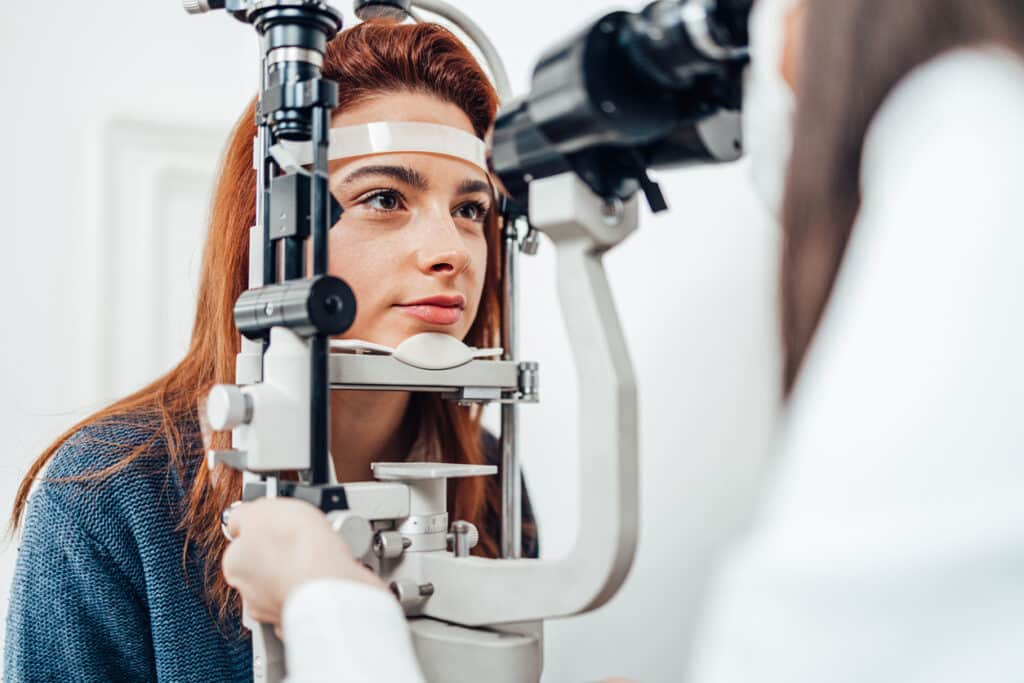
A thorough LASIK consultation allows us to look more closely at the factors that affect treatment planning. The evaluation includes measurements of your prescription, eye shape, corneal thickness, and level of eye dryness.
Those findings help Dr. Dornic determine whether your eyes are suited to LASIK or whether another refractive procedure deserves consideration. Certain corneal characteristics, dry eye, or other eye-health concerns may influence that recommendation.
This is why two people with similar eyeglass prescriptions may receive different treatment recommendations. LASIK planning depends on the structure and health of your eyes, not simply whether your prescription says you have astigmatism.
What Happens if LASIK Is Recommended?
If your examination shows that LASIK is a reasonable choice, our team will explain the procedure, postoperative instructions, and follow-up care.
You will need someone to drive you home after treatment, and you will receive instructions for using eye drops and protective eyewear. Our LASIK recovery information also explains what patients can expect during the first few days following surgery.
Vision can continue to change as your eyes heal, so your results and recovery experience should be considered individually rather than compared with someone else’s timeline.
Find Out Whether LASIK Is Right for Your Astigmatism
LASIK can correct astigmatism for many people, but determining whether it is right for you requires more than checking your prescription. If you are considering LASIK in Cary, North Carolina, call Laser Eye Center of Carolina at 919-467-9955 or contact us to arrange an evaluation with Dr. Dornic.