LASIK Surgery Raleigh, Durham & Cary NC

Using the Latest in LASIK Technology
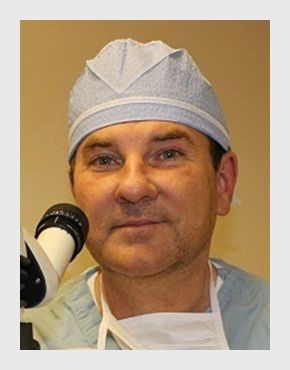
At Dr. Dornic’s state-of-the-art LASIK Raleigh & Durham offices, patients are offered sophisticated treatments geared towards reducing or eliminating their dependence on glasses and contact lenses. In order to deliver the best possible vision correction results, Dr. Dornic performs thorough evaluations and uses the latest laser eye surgery technologies. Our IntraLase laser is the safest available and our CustomVue technology has been proven to deliver the highest success rate. Contact our office to learn more about LASIK technologies.
What is LASIK?
LASIK is an acronym for Laser-Assisted In-Situ Keratomileusis, a procedure that uses a laser to reshape the cornea and correct refractive error, the failure of the eye to properly focus light on the retina.
There are three common types of refractive error that can be treated with LASIK eye surgery:
Refractive Errors Treatable with LASIK
Nearsightedness
Also known as “myopia”, nearsightedness occurs as a result of the eye growing too long from front to back, or from the cornea being too curved. This causes the light entering the eye to be incorrectly focused, and results in blurry vision.
Patients with nearsightedness are able to see up-close objects well, but have difficulty seeing objects in the distance.
Nearsightedness is very common and more than 3 million cases are reported each year.
Farsightedness
Hyperopia, also referred to as “farsightedness” occurs when the eye is too short, or the cornea develops improperly, and lacks curvature. This flat cornea causes incoming light to be bent improperly, resulting in nearby objects appearing blurry, while distant objects look normal.
Farsightedness is also very common, with around 3 million new cases reported each year.
Astigmatism
Astigmatism is also a result of a defect in the eye or shape of the lens. Astigmatism often occurs in conjunction with either nearsightedness or farsightedness. Patients with astigmatism have an eye that is slightly football-shaped, which prevents the incoming light from being focused. This results in vision being blurred at all distances.
The LASIK Procedure
 The first step in LASIK eye surgery is to create a corneal flap. A very fine layer of the outer corneal surface is incised with a laser or microkeratome and folded back to expose the stroma, the middle corneal layer. The second step of LASIK surgery is to use a laser to remove microscopic amounts of tissue to reshape the cornea. Lastly, the flap is returned to its original position and reseals itself.